How to Study for a Chemistry Exam in One Night: 6-Hour Triage Plan
With less than 12 hours until your Chemistry exam, passive rereading will sink your grade. Use this 6-hour triage framework to lock in high-yield formulas, worked examples, and rapid problem verification.
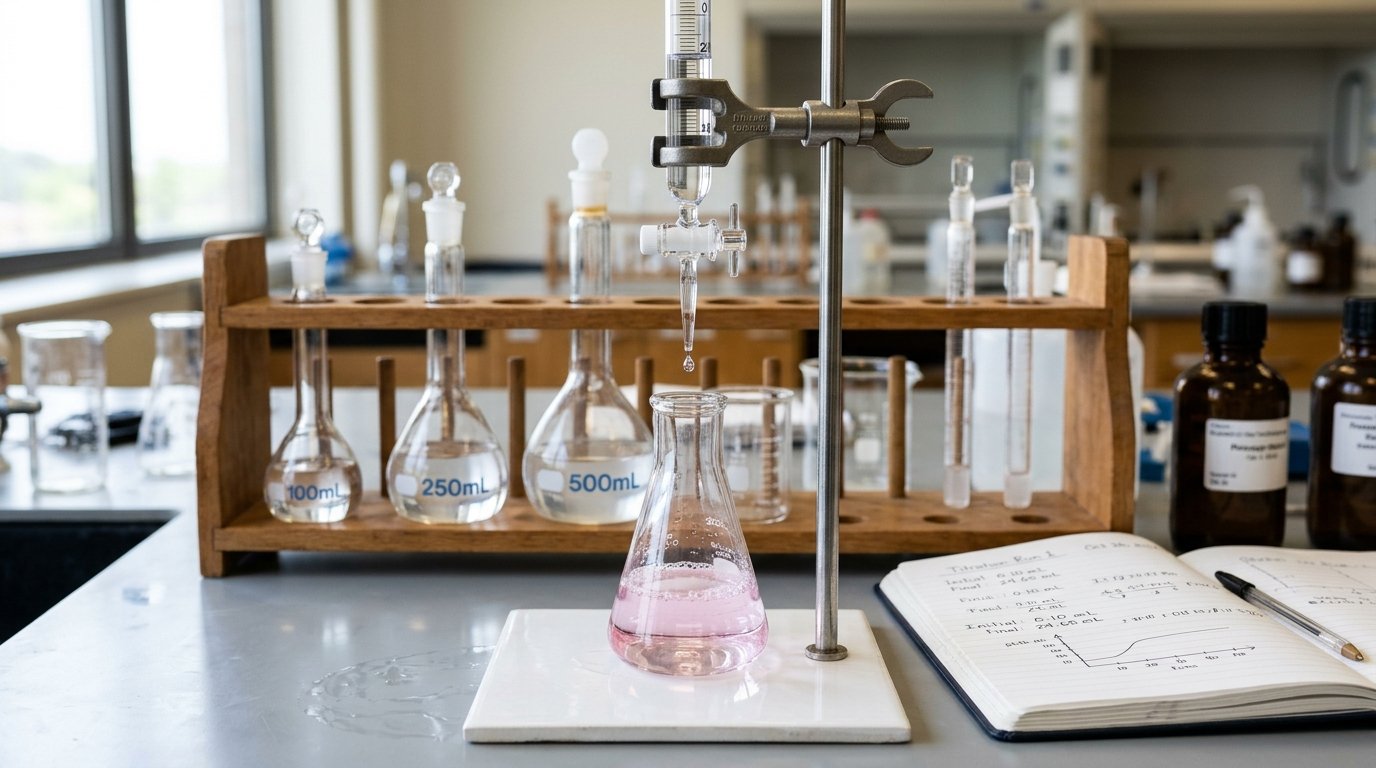
The 6-Hour Chemistry Triage: Why Passive Reading Fails
Staring at a 400-page Chemistry textbook at 9:00 PM triggers panic, not retention. When you only have one night left, trying to read every chapter from start to finish guarantees you will run out of time before reaching the hardest—and highest-weighted—exam problems. Instead of passive highlighting, you need a ruthless 6-hour triage plan that prioritizes active problem-solving over reading.
**Key takeaway:** In an overnight Chemistry cram session, 80% of your points come from 20% of the syllabus: stoichiometry, thermochemistry, equilibrium, and acid-base calculations. Master the formulas and worked problems first, and skip low-yield trivia.
To move at maximum speed without getting stuck on a single homework question for 45 minutes, pair your practice sheets with [AI HomeTutor](/). Using QuickSnap OCR or `Ctrl+V` inside your browser, you can capture a tricky Canvas or WebAssign problem and immediately switch between Direct Answer Only (to check your math) and Step-by-Step Study Guide mode (to see where your unit conversion broke down).
---
Your Overnight Study Schedule (Hour-by-Hour)
---
High-Yield Unit 1: Stoichiometry & Limiting Reactants
If you cannot balance an equation and convert grams to moles in under 60 seconds, every downstream unit—from thermochemistry to titration—will collapse. For a deeper dive into these foundational calculations, check out our guide on [Mastering Stoichiometry & Molarity: Solving Chemistry MCQs with Precision](/blog/mastering-stoichiometry-molarity-chemistry-mcq-shortcuts).
Worked Example: Limiting Reactant & Theoretical Yield
Problem: *How many grams of $\text{NH}_3$ are produced when $28.0\text{ g}$ of $\text{N}_2$ ($M = 28.02\text{ g/mol}$) reacts with $8.08\text{ g}$ of $\text{H}_2$ ($M = 2.02\text{ g/mol}$) according to:*
$\text{N}_2(g) + 3\text{H}_2(g) \rightarrow 2\text{NH}_3(g)$
1. Convert both reactants to moles:
• $n(\text{N}_2) = \frac{28.0\text{ g}}{28.02\text{ g/mol}} \approx 1.00\text{ mol } \text{N}_2$
• $n(\text{H}_2) = \frac{8.08\text{ g}}{2.02\text{ g/mol}} = 4.00\text{ mol } \text{H}_2$
2. Divide by the stoichiometric coefficient to find the limiting reactant:
• $\text{N}_2$: $\frac{1.00}{1} = 1.00$
• $\text{H}_2$: $\frac{4.00}{3} \approx 1.33$
• Since $1.00 < 1.33$, **$\text{N}_2$ is the limiting reactant**.
3. Calculate moles and mass of $\text{NH}_3$ ($M = 17.03\text{ g/mol}$):
• $n(\text{NH}_3) = 1.00\text{ mol } \text{N}_2 \times \frac{2\text{ mol } \text{NH}_3}{1\text{ mol } \text{N}_2} = 2.00\text{ mol } \text{NH}_3$
• $\text{Mass} = 2.00\text{ mol} \times 17.03\text{ g/mol} = 34.06\text{ g } \text{NH}_3$
---
High-Yield Unit 2: Thermochemistry & Gas Laws
Professors love combining Ideal Gas Law ($PV = nRT$) problems with enthalpy ($\Delta H$) because students constantly mix up units. Always match your gas constant $R$ to your pressure units:
• Use $R = 0.0821\text{ L}\cdot\text{atm}/(\text{mol}\cdot\text{K})$ when pressure is in **atm**.
• Use $R = 8.314\text{ J}/(\text{mol}\cdot\text{K})$ when calculating **energy, $\Delta G$, or $E_a$**.
Worked Example: Calorimetry ($q = mc\Delta T$)
Problem: *A $50.0\text{ g}$ sample of water ($c = 4.184\text{ J/g}\cdot^\circ\text{C}$) absorbs $1,046\text{ J}$ of heat. If its initial temperature was $22.0^\circ\text{C}$, what is the final temperature?*
1. Rearrange for $\Delta T$:
$\Delta T = \frac{q}{m \cdot c} = \frac{1046\text{ J}}{50.0\text{ g} \times 4.184\text{ J/g}\cdot^\circ\text{C}} = \frac{1046}{209.2} = 5.00^\circ\text{C}$
2. Find $T_{\text{final}}$:
$T_{\text{final}} = T_{\text{initial}} + \Delta T = 22.0^\circ\text{C} + 5.00^\circ\text{C} = 27.0^\circ\text{C}$
If you are also reviewing organic functional groups or naming rules tonight, do not waste time memorizing the entire textbook—focus on priority rules using our [Mastering Organic Chemistry Nomenclature: Breaking Down IUPAC Rules](/blog/mastering-organic-chemistry-nomenclature-iupac-rules) guide, or if you are prepping for a standardized state exam, review [How to Study for Chemistry Regents: Reference Table & MCQ Guide](/blog/how-to-study-for-chemistry-regents-reference-table-mcq-guide).
---
Common Exam Traps & How to Avoid Them
• **Celsius vs. Kelvin in Gas Laws:** Never plug $^\circ\text{C}$ into $PV = nRT$ or $\frac{P_1V_1}{T_1} = \frac{P_2V_2}{T_2}$. Always add $273.15$ first.
• **Sign Conventions in Thermochemistry:** Endothermic reactions *absorb* heat ($+\Delta H$); exothermic reactions *release* heat ($-\Delta H$). If a problem says "heat is released," your $q$ must be negative.
• **Equilibrium ($K_c$) Solids and Liquids:** Pure solids $(s)$ and pure liquids $(l)$ **never** appear in the equilibrium constant expression $K_c$ or $K_p$. Only include aqueous $(aq)$ and gaseous $(g)$ species.
• **Significant Figures on Online Platforms:** Canvas, WebAssign, and McGraw Hill Connect often mark an answer wrong for a 1-digit rounding error. Keep 2 extra digits during intermediate steps and round only at the very end.
---
Speed-Checking Practice Problems with AI HomeTutor
When it is 1:00 AM and you are grinding through a 30-question practice PDF, getting stuck on question #7 can derail your entire night. Installing the [AI HomeTutor Chrome Extension](/#extension) lets you highlight or screenshot any equation, Lewis structure, or stoichiometry word problem directly in your browser.
• **Built-in Tutor Vision 4:** Works out of the box with **no personal API key required** on the Free tier (20 solves/month), so you can immediately verify your practice answers.
• **Pro & Ultra Student Pass:** If you are tackling a massive problem set or want to route through your own personal API keys (Gemini 4 Flash, GPT-5.4, Claude Sonnet 5.5, or DeepSeek V4.1), check out [AI HomeTutor Pricing](/pricing) for 200 to 800 monthly solves.
• **Switch Modes on the Fly:** Use **Direct Answer Only** for rapid-fire MCQ drills, then toggle **Step-by-Step Study Guide** whenever you miss a question so you actually learn the mechanism before morning.
Frequently Asked Questions
Can I actually pass a Chemistry exam by studying in one night?
Yes, if you use a structured triage plan instead of passive reading. Focus 80% of your time on high-yield calculations—stoichiometry, gas laws, thermochemistry, and equilibrium—and actively solve practice problems rather than rereading chapters.
What are the most important Chemistry formulas to memorize for a cram session?
Prioritize moles (n = m/M), molarity (M = n/V), the Ideal Gas Law (PV = nRT), calorimetry (q = mcΔT), and pH = -log[H+]. Writing these on a single blank sheet from memory at the start of your session reveals what you need to drill.
What is the biggest mistake students make when cramming Chemistry?
Skipping unit conversions and forgetting Kelvin temperatures in gas laws. Always convert Celsius to Kelvin (+273.15) and match your gas constant R to your pressure units before plugging numbers into a formula.
How can AI HomeTutor help me study for a Chemistry exam faster?
AI HomeTutor's QuickSnap OCR lets you capture any Chemistry problem on Canvas, WebAssign, or a PDF and get instant verification. You can use Direct Answer Only to check your math fast, or Step-by-Step Study Guide mode to see exactly where your unit conversion went wrong.